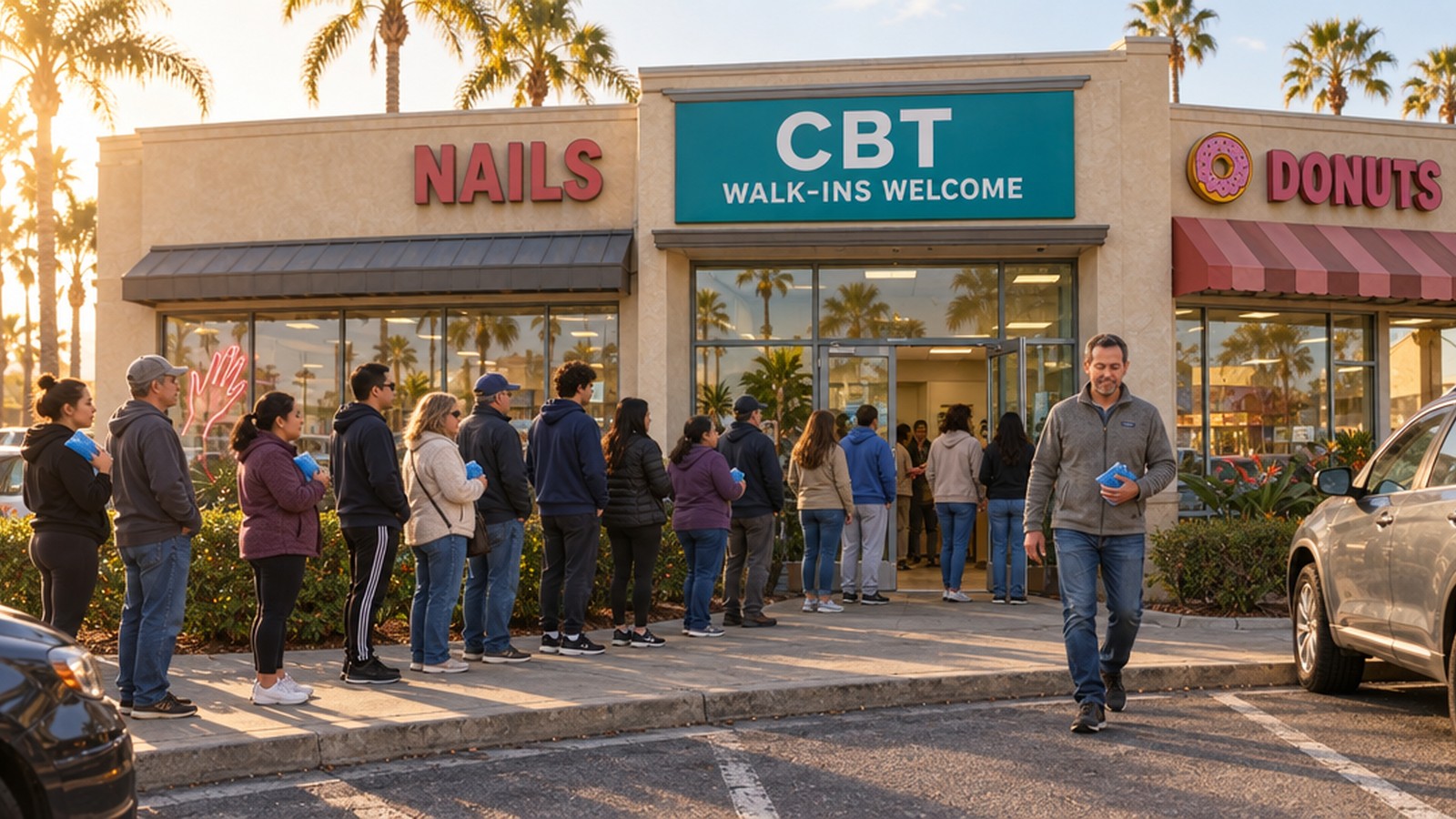
RESEDA, CA—A fast-growing chain of walk-in clinics advertising "CBT" in strip malls across the country is reporting remission rates that outpace traditional therapy, despite what state licensing officials on Friday called "a significant difference in the C."
The clinics, most of which opened this fall under plain teal signs reading "CBT — WALK-INS WELCOME," began drawing patients with anxiety, panic disorder and general unease, many of whom assumed the letters stood for cognitive behavioral therapy, the evidence-based treatment that typically runs twelve to twenty weekly sessions. According to staff, they did not.
"People assume the C stands for cognitive," said Marisol Ortega, 46, intake coordinator at the Reseda location, standing behind a front desk with a clipboard. "We never said that. The sign just says C-B-T." Ortega said every patient signs a one-page intake form whose final question reads "Have you read the sign?" and that, to date, "nobody has ticked either box."
The clinics charge a flat $35 per visit, accept no insurance, and validate parking. Sessions last approximately forty minutes. Staff declined to describe them in further detail, saying only that the method is "very present-focused" and that patients "stop thinking about the future almost immediately."
The results have unsettled the profession. "Real CBT takes sixteen weeks. Theirs takes forty minutes," said Dr. Alan Pryce, 61, a clinical psychologist who reviewed early outcome data compiled by a county mental health office. "Their remission rate is sixty-one percent." Pryce said he had spent most of the week trying to identify the active ingredient, adding that "the ice packs are probably not it."
Patients leaving the Reseda clinic Friday were calm, upright to varying degrees, and in several cases holding ice packs.
"Eleven years of talk therapy. Nothing," said Greg Halvorsen, 52, seated very carefully on a bench outside. "One visit here, and I have not thought about my anxiety once." Halvorsen said he had previously tried journaling, breathing apps, a weighted blanket and "a man in Encino with a gong," and that he now mostly thinks about "sitting down, and how to do it."
"My husband came back so calm," said Linda Cobb, 61, in the parking lot. "He just sits very carefully now." Cobb said her husband has stopped checking the stove four times before bed and has started "standing for most of dinner."
"Best thirty-five dollars I ever spent," said Walter Fenn, 80, walking out of the clinic with a validated parking ticket. "They validate parking."
Industry analysts say the chain is part of a broader walk-in wellness boom that has put IV drip bars, cryotherapy pods and "lymphatic studios" into nearly every suburban strip mall in America, and that consumers have learned to stop asking what the letters stand for. "Nobody knows what half of these acronyms mean," said one franchise consultant. "IV, HRT, CBT. You see three letters and a teal sign and you think, well, that's a doctor."
Word has since gotten out. Lines at the Reseda location now wrap around the block by mid-morning, and the clinic estimates a four-hour wait. Staff said most patients arriving this week are fully aware of what the letters stand for.
"It used to be walk-in," said Darnell Price, 35, roughly ninety people from the door. "Now it's a two-hour wait."
At press time, a regional supplier reported a shortage of ice packs entering its third day, and the Council had issued a notice reminding residents that "all acronyms are binding," that walk-in CBT is now covered under Council Wellness Plan B, and that "compliance is appreciated, and should be done sitting down."
—The Doctor
Comments
Post a Comment