Area Man Who Meditates 20 Minutes A Day Now Calmer, More Present, And Significantly More Insufferable
BOULDER, CO—A two-year study released Monday by researchers at the Halvorsen Center for Applied Calm has confirmed what many suspected: adults who meditate for 20 minutes a day become measurably calmer, more present and, by every metric the team collected, significantly more insufferable.
The study followed 1,100 adults across Boulder County who committed to a daily 20-minute practice. Over two years, participants' self-reported stress fell 31 percent, and their average resting cortisol fell with it. But researchers also measured the people who lived and worked alongside them. Their stress rose 40 percent.
"Calm is not destroyed. It is moved," said Dr. Ingrid Halvorsen, 62, who led the study and has meditated for "about nine minutes, once, in 1994." "The meditator gets the calm. Everyone within roughly forty feet gets the rest."
The findings build on a real line of research. A 2018 paper in the journal Psychological Science found that yoga and meditation did not quiet the ego as long promised, but instead boosted what psychologists call self-enhancement: right after a session, practitioners rated themselves as better than average at more things. The Halvorsen team says it simply asked the coworkers.
According to the study's appendix, the most common complaints logged by family members and colleagues were, in order: "breathes before answering," "says he is 'just noticing' things," "has started saying 'interesting' instead of 'okay,'" and "told me my anger was 'information.'"
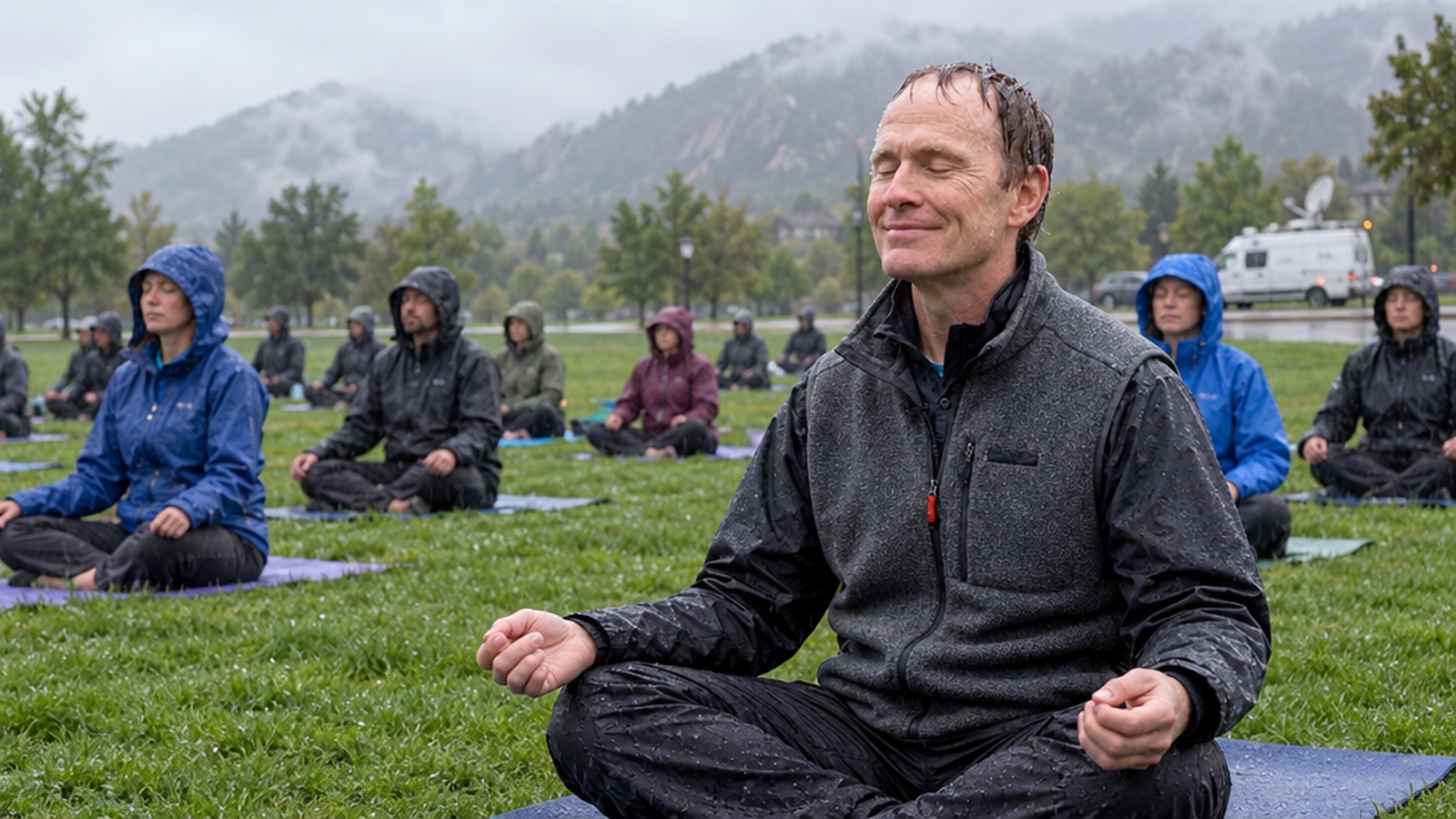
At a public park in north Boulder on Tuesday morning, where several dozen residents sat cross-legged on yoga mats in a steady drizzle, participants said the results matched their experience.
"I don't react anymore. I just noticed," said Greg Lunden, 45, a senior project manager who has meditated daily for three years. "I noticed my wife packing the car to leave me for her coworker or something. It was beautiful." Lunden said he has since noticed the house is "very quiet," which he described as "progress."
His colleagues were less moved. "It's true. He's at peace," said Dana Ruiz, 34, who shares a cubicle wall with Lunden. "Nobody else is."
"He says namaste to the self-checkout," said Mark Ostrowski, 52, adjusting his bike helmet. "Every time. The line is out the door."
Others described a change at home. "My son used to call me," said Bernadette Lunden, 74, walking a small terrier along the park path. "Now he sends me recordings of silence. Twenty minutes. I listen to all of it, in case he says something." She said he has not.
Researchers stressed that meditation itself remains safe and effective, and that the study's authors "are not against calm." The center recommends that people who meditate daily continue to do so, but practice "indoors, alone, and without describing it afterward." A follow-up study will examine whether the effect is stronger in people who also own a standing desk.
Asked whether the 40 percent rise in secondhand stress could be reversed, Halvorsen said early data was promising. "When the meditator moves out of state," she said, "the household recovers in about eleven days."
At press time, Lunden had been sitting alone on the empty lawn for over an hour, eyes closed, and told reporters he could feel them judging him, and that he forgave them.
Comments
Post a Comment